Tuesday, May 9, 2023

Saving Accounts: Which One Is Best?

 Getting Started

Making any financial decision requires a great amount of thought, effort, and knowledge. Opening a savings account is a great start in order to set yourself up for future financial success, but what type of savings account is best? Deciding what types of accounts to open can be difficult and overwhelming if one is not equipped with the proper knowledge.


Interest Rates on Accounts


“These 2 savings accounts have interest rates of about 5%: Here's which one you should choose” says, “The average interest rate of a checking account is 0.6%” (CNBC, 2023). Making the decision to move this money from a checking account into a savings account may be highly beneficial. You will not only be conserving this money for the future, but you will gain a much higher interest on your money. In this article, we will discuss two different kinds of savings accounts both with around a 5% interest rate. 


What are High-Yield Savings Accounts (HYSA)?


In his article “These 2 savings accounts have interest rates of about 5%: Here's which one you should choose”, Mike Winters states that the interest rates of High-Yield Savings Accounts are dependent on the state of the market, inflation, and changes in the Federal Reserve's benchmark interest rate. They are typically offered by smaller online banks or credit unions and possess higher interest rates. Looking for the highest interest rate is an important factor when searching for the best account, although there are several other factors you will want to consider. Specific accounts may have a minimum balance requirement, contain limits on withdrawals, and perhaps even come with specified maintenance fees. You will want to weigh your options and choose the account that will fit your demands and needs best.


What are Certificate of Deposits (CDs)?


CDs (Certificate of Deposit), also known as Time Accounts, are accounts that do have a fixed rate over a specified period of time. According to Winters, They also typically offer higher interest rates at about 5% compared to the average 4.5% that High Yield Saving Accounts do. This term is guaranteed, and can typically span over six months to five years. The two different types of CDs are long-term and short-term; with long-term CDs having slightly higher interest rates. 


Considering this information, CDs sound like the obvious choice when it comes to choosing between the two types. But here's the catch:With CDs, you are required to fully commit and lock in to the entirety of the designated term. If you want to withdraw money earlier than the fixed term, you will be charged a fee worth several months interest on the balance.


Choosing an Account for You


A High-Yield Savings Account may be right for you if:

  • Require immediate access to your funds

  • Will need to access emergency funds (three-six month funds)

  • Unsure of when you will need the money

  • Comfortable with knowing interest rates have the power to fluctuate up or down


A Certificate of Deposit may be right for you if:

  • Know exact timeline of when you will need your funds

  • Planning for a downpayment on a future home or car purchase

  • Have a savings goal that matches duration of the CD (this will maximize your return on interest)

  • Example: A 2-year CD with a predictable return rate & planning to send your child to college in 2 years

The Bright Side of Both


Altogether, both High-Yield Savings Accounts and CDs are considered to be low risk investments, safe, and insured by the FDIC (Federal Deposit Insurance Corporation) for up to $250,000 per depositor. Additionally, there is no risk that your money will decline in value like it does have the potential to decline with stocks or bonds.



We’ve Got Your Back,

Your Financially Fit Team


Wednesday, April 5, 2023

Money and Happiness


Many people believe that having more money leads to greater happiness, while others argue that money cannot buy happiness. While there is definitely a relationship between money and happiness, it is hard to say if more money does, in fact, lead to a greater level of happiness. 

First, let's define what we mean by happiness. Happiness can be described as a positive emotional state characterized by joy, contentment, and satisfaction. It is a subjective experience influenced by various factors, including genetics, personality, life circumstances, and environmental factors.


Now, let's turn our attention to money. Money is a medium of exchange used to purchase goods and services. It is often seen as a symbol of wealth and success and measures one's financial status. People often believe that having more money will lead to a better quality of life, and therefore, greater happiness.


So, does money actually buy happiness? In an article published by PennToday, research suggests that there is a relationship between money and happiness, but it is more complex than many people believe. Let's explore some of the ways in which money and happiness are related.


Basic Needs and Financial Security

One way in which money can contribute to happiness is by providing for our basic needs and financial security. Having enough money to meet our basic needs, such as food, shelter, and healthcare, is essential for our well-being. We cannot live a healthy and fulfilling life without these basic necessities. Financial security is also important for our mental health and well-being. Knowing that we have enough money to cover our expenses and plan for the future can reduce stress and anxiety.


According to the National Institute of Health, research has shown that people who live in poverty or struggle financially are more likely to experience negative emotions such as stress, anxiety, and depression. Therefore, having enough money to cover our basic needs and achieve financial security can contribute to our overall happiness.


Material Possessions and Status

Another way in which money can contribute to happiness is through material possessions and status. Material possessions such as a house, car, or vacation can bring pleasure and enjoyment into our lives. Additionally, having a higher income can provide a sense of status and social recognition, which can boost our self-esteem and confidence.


However, the relationship between material possessions and happiness is not straightforward. Further research discussed in The Atlantic has mentioned that the initial pleasure and excitement that comes with acquiring a new possession tends to wear off over time, and we quickly adapt to our new level of wealth. This phenomenon is known as the "hedonic adaptation" or "hedonic treadmill." Essentially, our desire for more material possessions and status increases as we become accustomed to our current level of wealth. This means that the satisfaction we get from material possessions tends to be short-lived, and we are constantly striving for more.


Furthermore, the pursuit of material possessions and status can lead to a "keeping up with the Joneses" mentality, where we compare ourselves to others and strive to have more than those around us. This constant comparison and competition can lead to feelings of envy, jealousy, and dissatisfaction. Therefore, while material possessions and status can contribute to our happiness to some extent, they are not the key to long-term happiness.


Time and Experiences

A third way in which money can contribute to happiness is through the time and experiences that it allows us to have. Having more money can provide us with more opportunities to pursue our passions and hobbies, spend time with loved ones, and explore new places and experiences. Another article published by Forbes discussed research conducted by San Francisco State University "found that people who spent money on experiences rather than material items were happier and felt the money was better spent." This would include spending money on experiences, such as travel, concerts, or dining out, which tends to bring more lasting happiness than spending money on material possessions.


Furthermore, having more money can allow us to have more free time, which can contribute to our happiness. Time is a valuable resource. Money may not buy happiness, but sometimes, it can help alleviate the financial troubles we are faced with in times of need and desperation.  


Here to Help, 

Your Financially Fit Team

Tuesday, February 7, 2023

Rising Interest Rates: What Can You Expect?

The Federal Reserve recently announced their plans to raise interest rates in the United States. This comes as no surprise to many considering they raised them an astounding seven times in the last year. According to the official Federal Reserve website they stated that, “The Board of Governors of the Federal Reserve System voted unanimously to raise the interest rate paid on reserve balances to 4.4 percent.” This decision acts as a method to try and control the sporadic amount of inflation that is happening and bring it down to a balanced medium for sustainable economic levels. Considering the recent pandemic, and the war on Ukraine, it has been a central issue within the Biden Administration. The US has spent trillions of dollars, most of which has sparked controversy given the geopolitical factors taking place at home and abroad. In retrospect, rising interest rates will have a significant impact among everyday Americans. 


The home market may also be impacted by rising interest rates. Mortgage rates climb along with interest rates, making it more expensive for prospective homeowners to buy a property. According to Investopedia, “when the economy is strong, interest rates tend to rise along with growth. Higher interest rates, however, translate into higher mortgage loan costs.” As a result, there may be less demand for homes, which might slow down the housing market and possibly result in a drop in home values. This may have an impact on homeowners' wealth and financial security and make it more difficult for first-time purchasers to enter the market.


Consequently, rising interest rates can reduce consumer spending and company profitability, and may also have an impact on the stock market. Consumer spending is likely to drop and economic growth may lag when interest rates rise because people will decide to preserve their money rather than spend it. Investopedia also points out that, “Higher interest rates tend to negatively affect earnings and stock prices.” This can therefore have an effect on the stock market, resulting in a drop in stock prices. Americans who have stock investments may see a large reduction in the value of their holdings as a result of this.


Likewise, the job market may be disrupted by an increase in interest rates. Interest rates rise because borrowing money becomes more expensive for businesses, which lowers corporate investment and might push businesses to make fewer hiring decisions. Investopedia also indicates that, “by raising the bar for investment, higher interest rates may discourage the hiring associated with business expansion.” This may result in fewer job openings and maybe greater unemployment rates. Americans may be significantly impacted by this, particularly those who are seeking employment opportunities.


These rising interest rates will negatively impact a consumer’s borrowing and spending money in a variety of sectors. Whether it is mortgages, consumer spending and low employment participation, they are all influenced to some degree by the changes in the interest rate. To put this in a much broader perspective, according to an article published by Bankrate, “About 25 million Americans have at least one personal loan.” Deciphering this statistic demonstrates the large-scale popularity for borrowing money at a time when inflation is scaling above its previous ceiling. As a result, personal loans are popular because their interest rates are lower than the national percentage. 


To understand more about loans and how you can protect yourself during a time of rising interest rates, You can read our previous blog about how you can stay ahead of the terms and conditions you might be faced with when signing to borrow more money. 


Here to help,

Financially Fit Employees


Tuesday, January 17, 2023

Why the Term "Sale" is Manipulative

The term "sale", in reference to the language used by businesses when they sell goods at reduced prices, is often used in marketing and advertising to manipulate consumer behavior and drive sales. This tactic is known as "sales psychology" and is based on the idea that people are more likely to make a purchase when they believe they are getting a good deal or a discounted price. Max Freedman, who is a contributing writer for Business.com, offered an alternate view towards why people buy. “There are different ways that individuals buy products. Some customers buy impulsively and rationalize the purchase later. In other cases, the person uses logic and reason over emotion when purchasing new products.” This census provides advertisers the rationale to use sales psychology tactics to coerce consumers into making stimulated purchases repeated over the course of many payment interaction systems. Today, we will be going over many tactics deployed from sales psychology that, as a consumer, you can become aware of and make yourself less susceptible to falling into one of these traps set by advertisers and other businesses.

Tactic One:

One common tactic used in sales psychology is the use of limited time offers, such as "flash sales'' or "doorbuster deals." These types of promotions create a sense of urgency and scarcity, which can make consumers feel like they need to make a purchase quickly before they miss out on the deal. How often does your own news feed project major promotional headlines full of “last minute” or “extended” specials. Your email inbox is probably full of them. Are these sales and specials really designed to help you? No, ‘Sales’ are loaded words, psychological tools to convince you, the consumer, to part with your hard-earned money. According to Priceintelligently.com, “The idea behind psychological pricing is that customers will read the slightly lowered price and treat it lower than the price actually is.” Retailers, and often their marketing departments, will use all different kinds of sales sizzle language to tie your emotions or intelligence to their offers (“I’m being smart buying at this price”, “they’re practically giving it away”). Trained, well-paid psychologists and advertising experts armed with data points have manipulated the media to convince you to give them your money by using certain language like “limited time offer” or “while supplies last” to create the illusion of “get it before it’s gone”.

Tactic Two:

The second tactic used in sales psychology is the use of "anchoring," which is the practice of setting a high price for a product and then offering a discounted price to make the sale appear more appealing. This can make the consumer feel like they are getting a great deal, even if the discounted price is still higher than the normal market price for the product. Businesses also use price comparisons to make consumers feel like they are getting a good deal. For example, a retailer might advertise a product as being "50% off" when compared to a higher "original" price, even though the "original" price was never actually charged for the product. Remember that generally a real sale is designed to reduce prices to offload excess (otherwise called UNWANTED) goods. The morality here is having the discipline to not buy items like unwanted goods that you do not have the money for.

These are just a few examples of how the term "sale" can be used to manipulate consumer behavior. Sales psychology is a powerful tool that retailers use to drive sales and increase profits, but it can also be misleading and manipulative. It is important for consumers to be aware of these tactics and to approach sales with a critical eye, to ensure they are getting a fair deal and not being taken advantage of. This approach also ties into BNPL systems that coerce consumers into paying for things under financing conditions that aren’t always

P.S. Here are some questions to ask before engaging with a retail sale:

 “Am I buying this just because it is on sale?"

Cross reference your prices, ask “Could I find this item for a better price somewhere else? How much does it cost to manufacture?"

Here to help,

The Financially Fit Coaches Team

Tuesday, January 3, 2023

Situational Awareness With Checking Accounts

Effective management of your personal finances is essential for achieving your financial goals and avoiding financial stress. One important aspect of personal finance management is knowing how much to keep in your checking account and where to store excess funds.

It is important to keep enough money in your checking account to cover your expenses and avoid overdraft fees. According to Consumer Finance overdraft fees “occur when you don’t have enough money in your account to cover a transaction, but the bank pays the transaction anyway.” They can also be costly and add up quickly. According to experts, it is recommended to keep a balance in your checking account that is enough to cover two months worth of expenses plus a 30% buffer. Again, this follows the 50/30/20 rule of principle when dividing money in the correct locations. This will give you a cushion in case of unexpected expenses and help you avoid overdraft fees, which on average are $33.58, according to Bankrate


But what about excess funds in your checking account? Checking accounts do not typically offer any interest, so it is not ideal to keep large amounts of money in a checking account long-term. Instead, it is recommended to store excess funds in a high-interest savings account. By placing your excess funds in a high-interest savings account, you can earn additional money on your balance through interest. It is a good idea to compare the annual percentage yield of your savings account to other banks' offers, as they can vary widely.


Personal finance management involves more than just knowing how much to keep in your checking and savings accounts. It is also important to create a budget, set financial goals, and find ways to save and invest your money. A budget can help you track your expenses and ensure that you are not overspending. Setting financial goals can give you something to work towards and provide motivation to make smart financial decisions. And finding ways to save and invest your money can help you grow your wealth over time. Keep in mind, checking accounts in these situations are a catalyst to help manage what is coming in and going out. It's a reference point of how much money is available to you on demand. 


Managing your personal finances effectively requires discipline and planning, but it can also lead to greater financial security and freedom in the long run. By following the guidelines outlined above and finding the approaches that work best for you, you can work towards achieving your financial goals and enjoy the peace of mind that comes with being in control of your finances, especially when it comes to maneuvering checking accounts. 


Here to Help, 

Your Financially Fit team


Monday, December 19, 2022

The Envelope System

The envelope system is a budgeting method that involves allocating a set amount of cash to specific spending categories and physically placing the cash in labeled envelopes. This method can be a helpful tool for those who want to take control of their finances and avoid overspending. There are several positive outcomes to using the envelope system with cash, rather than debit or credit cards. Here are some of the key advantages:

Improved Financial Awareness: Using cash can help you become more aware of your spending habits. When you pay with cash, you are physically handing over the money and seeing the amount decrease, which can make the cost of a purchase feel more tangible. Whereas, paying with debit or credit cards can feel more abstract, as you are not physically seeing the money leave your possession. By using cash in practicing the envelope system, you can become more attuned to your spending and make more mindful decisions about where to allocate your money.

Avoidance of Debt: Credit cards can be a convenient way to make purchases, but they can also lead to debt if not used responsibly. When you pay with a credit card, you are essentially borrowing money from the credit card company and accruing interest on the balance if you do not pay it off in full each month. Using the envelope system with cash can help you avoid this cycle of debt by limiting your spending to what you have on hand.

Improved Budgeting Skills: The envelope system requires you to plan ahead and allocate your money to specific categories, which can help you develop better budgeting skills. By allocating a set amount of cash to each category, you can see exactly how much money you have left for the month and make adjustments as needed. This can be especially helpful for those who struggle with impulse spending or overspending in certain areas.

Enhanced Security: Carrying around large amounts of cash can be risky, but the envelope system allows you to limit the amount of cash you have on hand at any given time. This can be especially important for those who are concerned about theft or loss. In addition, using cash can help protect you against identity theft, as there is no information tied to the transaction that could be stolen.

Improved Financial Discipline: Using the envelope system can help you develop better financial discipline by requiring you to plan ahead and make conscious spending decisions. When you allocate your money to specific categories and physically see the cash depletion as you make purchases, it can be easier to stick to your budget and avoid overspending.

Improved Relationship with Money: The envelope system can also help improve your relationship with money by forcing you to confront your spending habits and make conscious decisions about how to allocate your resources. By using cash and the envelope system, you can better understand your financial goals and work towards achieving them.

Overall, the envelope system can be a useful tool for those looking to take control of their finances and avoid overspending. By using cash and allocating your money to specific categories, you can become more aware of your spending habits, avoid debt, improve your budgeting skills, enhance security, develop financial discipline, and improve your relationship with money.


Here to Help, 

Financially Fit Team


Wednesday, November 23, 2022

How Cryptocurrency is an Another Investment Avenue

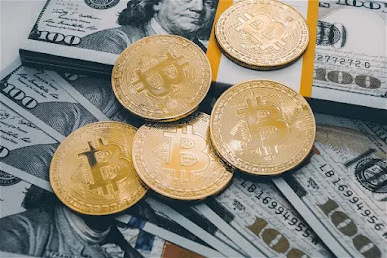
There are many different types of investments to consider when looking to grow your money as you make your way through your financial career, such as stocks, mutual bonds, ETF’s, 401K retirement accounts and even real estate. One alternative investment type that not many consider is cryptocurrency. Cryptocurrency is another type of investment choice that has gained popularity since the early 2010s. To put this in perspective, one article written by CNBC said, “Nearly 40% of millennials and Gen Zers who own cryptocurrency plan to use it to make payments.” The question becomes, why would anyone consider investing in cryptocurrency? Before consideration, we must understand what cryptocurrency is, alongside the benefits and downsides.

What is Cryptocurrency?

According to Forbes, Cryptocurrency is described as "a digital, encrypted, and decentralized medium of exchange." As complex as it may sound, it is quite simple, the whole idea of cryptocurrency is based on the premise of providing an alternative form of payment. Most recently we have seen many businesses accept digital currency for various purchases. For example, Whole Foods accepts crypto payments for grocery purchases. Regal Cinemas accepts crypto payments for watching movies. Even Chipotle accepts crypto payments for food purchases. According to a CNBC article, “About 75% of them plan to begin accepting crypto or stablecoin payments within the next two years, according to a recent Deloitte survey.” Many retailers, restaurants, cinemas and other venues are now valuing cryptocurrency more than ever. This means that the dollar is slightly becoming less significant as its value heads on a steadfast decline. 


What is the Most Popular Cryptocurrency & How Do I Access It?

There many different digital currencies available to purchase and use, such as Bitcoin, Ethereum, Polygon, and Litecoin. However, for the purpose of this discussion we will focus on the two that are not only the most valuable, but also deemed the most profitable for both long term and short term investments. Starting with Bitcoin, this digital currency ranks number one as the most sought after long term investment coin in the market. Bitcoin is a decentralized digital currency that is primarily used as an alternative form for money. You can use it to pay for things and you can buy it to hold for as long as you want. The same goes for Ethereum, however this coin in particular has more utility to it because it serves as a way to buy items on the block chain which contains NFTs (non-fungible tokens). You can access both these digital coins on websites like Coinbase, Binance, eToro, Bitstamp and Gemini. For more information on how you can gain easy access to cryptocurrency, read this article here.


What are the Benefits & Downsides of Cryptocurrency?

With every investment opportunity there are many benefits as well as downsides. Some benefits include self-managed, security, easy exchange, and decentralization. Decentralization is the number one benefit among the variables. Digital currency monopoly is non-existent, meaning no single entity can influence the sequence and value of the currency like Bitcoin and Ethereum. This proves to be more effective than the United States Dollar, due to the nature of the dollar being heavily influenced and controlled by the government (federal reserve). On the other hand, as mentioned previously, there are downsides. One of them is data losses. This entails when individuals lose their secured password and or private encryption reference to access the cryptocurrency, and it is unrecoverable. The premise of this is to protect the integrity of the digital currency, which suggests that when individuals make accounts to buy and / or trade cryptocurrencies to make sure to save their access codes, once lost that is the end of accessing your cryptocurrency account. Another downside is that there are completely no take backs. This implies a no cancellation policy when investing in any digital currency like Bitcoin, Ethereum and so on and so forth. Accidentally sending digital currency for specific transactions cannot be recovered, even when dire mistakes are made. It is important to be aware of the nature of dealing with cryptocurrency when using it for trading and or buying potential.


How Do I Know Which Digital Currency is the Right Investment? How Do I Avoid the Bad Ones?

The answer is continuous research for as long as you are interested and invested. Otherwise, investing in things based on speculation won't necessarily get you very far considering FOMO (Fear of Missing Out) risk would be at all time high. Understanding which cryptocurrencies to invest in is hard and there is not a concrete right answer. It depends on the nature in which you will go about using the digital currency. Whether it be trading daily, short and long term, it all requires different steps and preparation to make the initial steps. Every investment has a level of risk associated with it, and thus, acquiring knowledge on such ordeals help you prepare to mitigate it as much as possible. 


The Bigger Picture

Learning new investments can be difficult, but it doesn't have to be. It just requires patience and time. There is no need to rush - especially on something as controversial as cryptocurrency. Many experts have mentioned that Digital currencies are incredibly volatile. Jason Mitchell, the CTO of Smart Billions, a crypto website said, “Cryptocurrencies are becoming more and more integrated into our society with each passing day.” Even though they can be hard to understand right now, their usefulness continues to grow over the normal dollar today. Its ability to be independent from any governmental control and influence  grants a unique kind of perpetuity. 


Here to Help, 

Your Financially Fit Team